The comparison between Rosetta Stone vs Babbel vs Duolingo depends on your learning goals, budget, and preferred teaching style. Although these apps help develop language skills, they use different methods to teach vocabulary, grammar, pronunciation, and conversation.
Fun and small lessons are Duolingo’s main focus. Although Babbel highlights practical conversations and grammar, Rosetta Stone uses impressive learning methods without depending on translation. We’ll today compare all three apps based on their features, advantages, and limitations to help you select the right app for your needs.
Rosetta Stone vs Babbel vs Duolingo: Quick Comparison
| Features | Rosetta Stone | Babbel | Duolingo |
| Teaching method | Immersion & visual learning | Structured lessons & conversation | Gamified lessons & repetition |
| Lessons offered | Approx. 25 | Around 14 | More than 40 |
| Duration | 10 to more than 30 minutes | Approx. 10 to 15 minutes | Approx. 5 minutes |
| Grammar instruction | Less | Detailed explanation within lessons | Basic |
| Speaking practice | Strong | Conversation & speech exercise | Limited |
| Free trial | 3 day | Limited | Free version is available |
| Why Should use | Immersion & pronunciation | Practical conversation & grammar | Beginner & budget-concious |
Language availability, lesson formats, and subscription options may change over time.
What Is Rosetta Stone?

It is popular for its immersive teaching method. Images, audio, written words, and real-life situations help learners understand a new language through context here.
Users can easily practice pronunciation through its TruAccent speech recognition. Stories, phrasebooks, videos, etc. are also available here for easy language learning.
Pros of Rosetta Stone
- Immersive learning experience
- Strong focus on pronunciation & listening
- Visual exercises are helpful to connect words with their meanings
- Extra learning resources support more practice
Cons of Rosetta Stone
- Less grammar explanation
- Repetitive exercises
- Paid subscription
Rosetta Stone is still a good option for learning through context and improving your pronunciation. Learners, however, looking for detailed grammar lessons may prefer a more structured alternative.
What Is Babbel?
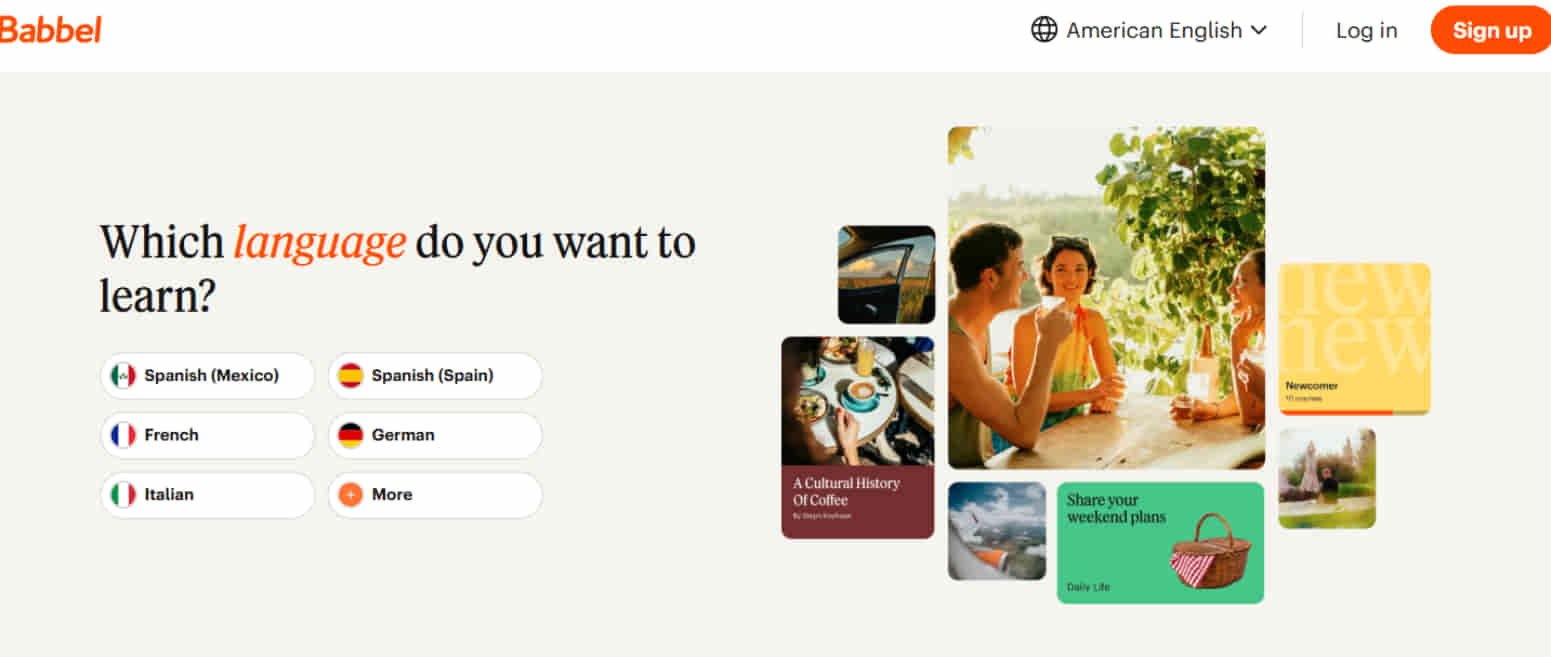
It focuses on practical learning skills and vocabulary used in daily life. This is why vocabulary, grammar explanations, listening exercises, speaking practice, and realistic dialogues are combined here within its lessons.
Lessons usually last around 10 to 15 minutes. This makes them ideal for busy people. Review sessions, podcasts, audio lessons, and other supplementary resources are also available on Babbel.
Pros of Babbel
- Structured lessons with deep grammar explanations
- Real dialogues for daily situation
- Short lessons
- Review exercises
- Speech recognition
Cons of Babbel
- Less languages
- Different course depth
- Live classes may be missing in some languages
Babbel is especially useful for developing conversational skills for travel, work, or personal goals. It is a strong choice for people looking for grammar & practical exercises.
What Is Duolingo?
Duolingo uses game-like lessons to make daily practice enjoyable. Users here complete short exercises, earn points, maintain streaks, and unlock achievements as they progress.
Although 40+ language courses are available here, their availability depends on the language you speak. Beginners can use its free version to explore a new language without committing to a subscription.
Pros of Duolingo
- Free version with course access
- Short lessons
- Rewards & streaks
- Big collections of languages
- Simple interface
Cons of Duolingo
- Grammar instruction is limited
- Some exercises use unnatural sentences
- Advertisements are there in the free plan
Duolingo is perfect for beginners to build a daily learning habit. It should, however, be supplemented with other resources if you are preparing for professional conversations or seeking deeper language skills.
Read more: Speaky App Review: Why I Chose Speaky App?
Quizlet vs Anki: Which Flashcard App Is Better in 2026?
Which App Should You Choose?
Your learning needs depend on which app you should use.
Although Rosetta Stone is perfect for immersive learning, visual exercises, and pronunciation practice, structured lessons, grammar explanations, and practical conversational skills make Babbel ideal for learning. Duolingo can also be considered a free starting point, short lessons and a fun way to practice daily
You can start with Duolingo to build a habit. It’s best to study through Babbel for structured conversation practice or Rosetta Stone for an immersive experience.
FAQs
Which is better: Rosetta Stone, Babbel, or Duolingo?
It depends on your needs for learning a language. Rosetta Stone is perfect for its immersion and pronunciation practice. Babbel is also a strong option for structured lessons along with daily conversation. Duolingo also deserves your attention for its free, short lessons.
Is Babbel better than Duolingo?
Although more structured grammar instruction and practical dialogues are available in Babbel, Duolingo should be used for free access and a game-like experience.
Can you become fluent using these apps?
They can indeed develop vocabulary, listening skills, and confidence. Speaking with other people, listening to native speakers, reading, and writing are also important for becoming fluent.
Final Verdict
Each platform serves a different purpose in the comparison of Rosetta Stone vs Babbel vs Duolingo.
Immersion is available in Rosetta Stone. Although Babbel offers structured lessons and practical conversation exercises, language learning becomes accessible through Duolingo’s free version and game-like approach.
You should select your platform based on your learning goal, and remember that consistency is more important than using an app.