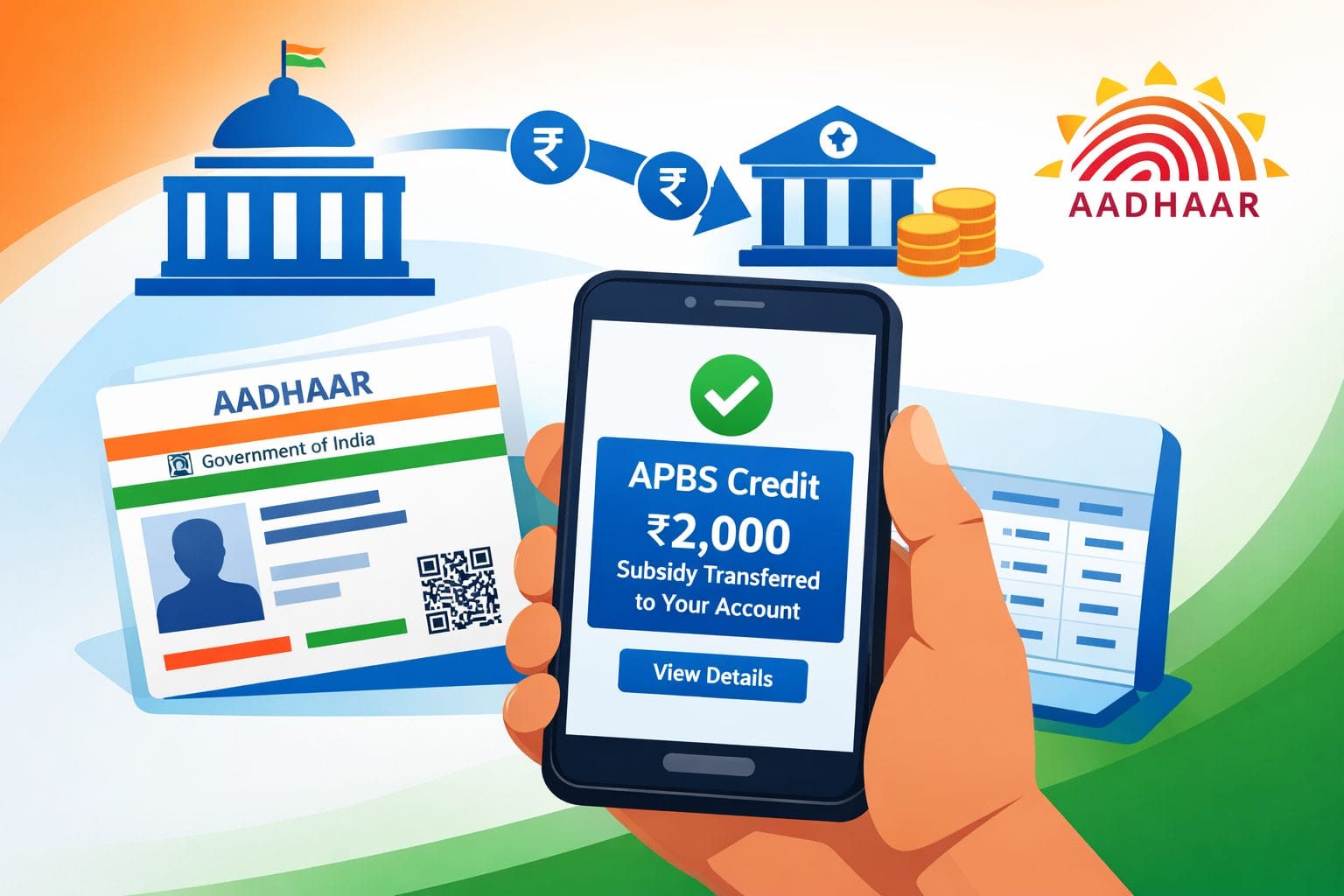
APB Subsidy Meaning: Complete Guide to Aadhaar Payment Bridge System in 2026
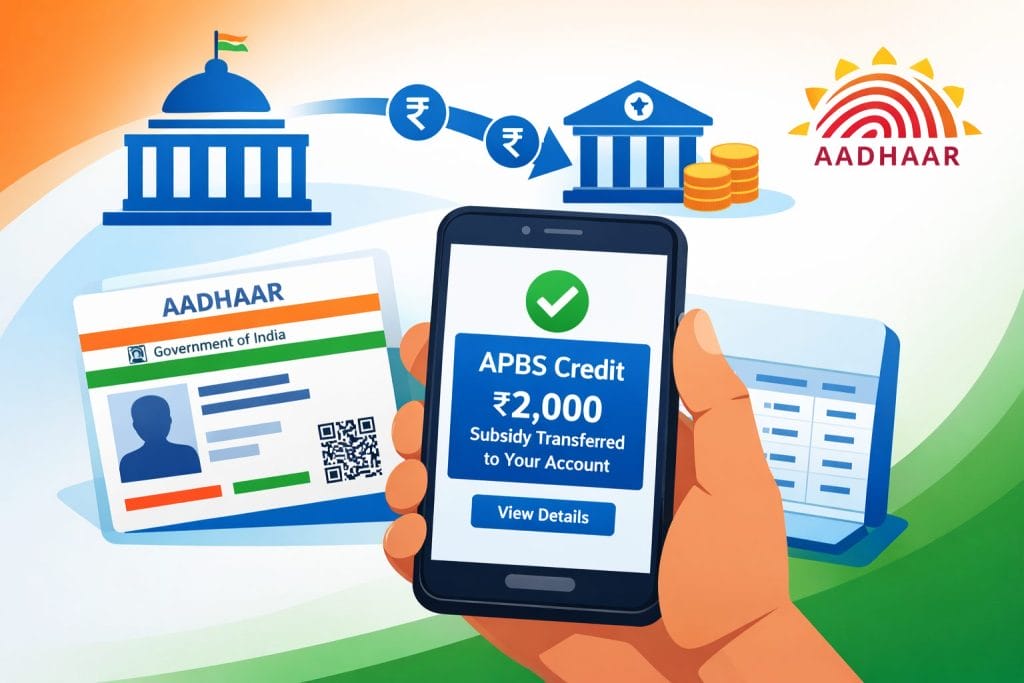
If you’ve noticed a credit transaction in your bank statement labeled “APBS” or “APB subsidy” and wondered what it means, you’re not alone. Thousands of people across India receive these payments monthly, yet many don’t fully understand the system behind them.
In this comprehensive guide, I’ll explain everything you need to know about APB subsidy meaning, how the system works, its benefits, and how you can ensure you receive your entitled government benefits without delays.
What is APB Subsidy? Understanding the Full Meaning
APB subsidy refers to Aadhaar Payment Bridge Subsidy, a financial system in India used to streamline and ensure the secure and direct transfer of government subsidies and benefits to eligible citizens. The full form of APB is Aadhaar Payment Bridge, and it represents a revolutionary electronic payment infrastructure developed by the National Payments Corporation of India (NPCI).
Unlike traditional subsidy distribution methods that involved intermediaries, paperwork, and significant delays, the APB subsidy system uses your unique 12-digit Aadhaar number as a financial address to route government payments directly into your bank account.
When you see “APBS credit” or “APB subsidy” in your bank statement, it means the government has transferred money to you under one of their welfare schemes using the Aadhaar Payment Bridge system.
How Does the APB Subsidy System Work?
Understanding how the APB subsidy works helps clarify why it’s become the preferred method for government benefit distribution in India.
The Technical Process Behind APB Subsidy
The APB System links your Aadhaar number with your bank account, and when the government needs to give you money for subsidies or pensions, they use your Aadhaar details to transfer the funds directly. Here’s the step-by-step process:
Step 1: Aadhaar-Bank Account Linking. You first need to link your Aadhaar number with your bank account. This creates a mapping in the NPCI’s central database that connects your unique Aadhaar number to your specific bank account details.
Step 2: Eligibility Verification Government departments verify your eligibility for specific welfare schemes based on criteria like income level, age, occupation, or other qualifying factors.
Step 3: Payment Initiation Once eligibility is confirmed, the government department initiates a payment using your Aadhaar number instead of traditional bank account and IFSC code details.
Step 4: NPCI Routing The payment request goes through the National Payments Corporation of India’s Aadhaar Payment Bridge system, which automatically identifies which bank your Aadhaar is linked to.
Step 5: Direct Credit The subsidy amount is credited directly to your Aadhaar-enabled bank account, typically within hours or a few days, depending on the scheme.
This entire process happens electronically without any physical documentation or manual intervention, making it faster and more reliable than previous systems.
What Types of Subsidies Are Paid Through APB?
The APB subsidy system supports a wide range of government welfare schemes and benefit programs. Understanding which subsidies use this system helps you track your entitlements better.
Common Government Schemes Using APB Subsidy
1. LPG Subsidy (DBTL) Direct Benefit Transfer for LPG Subsidy provides the LPG subsidy amount applicable on the domestic LPG cylinder directly into the consumer’s bank account. You pay the full market price for your cylinder, and the government subsidy is credited back to your account through APB.
2. MGNREGA Payments Workers under the Mahatma Gandhi National Rural Employment Guarantee Act receive their wage payments directly through the APB subsidy system, ensuring timely and transparent compensation.
3. Social Security Pensions Various pension schemes including old age pensions, widow pensions, and disability pensions are disbursed using APB subsidy mechanisms.
4. Scholarship Payments Educational scholarships for students from economically weaker sections, minorities, and reserved categories are transferred through APB to reduce delays and corruption.
5. Fertilizer Subsidies Farmers receive subsidies on fertilizers and agricultural inputs directly in their accounts through the APB system.
6. Healthcare Benefits Various health insurance reimbursements and medical assistance programs use APB for quick fund transfers.
7. Food Security Subsidies Some states use APB for direct cash transfers related to food security programs replacing physical ration distribution.
8. Housing Subsidies Schemes like Pradhan Mantri Awas Yojana disburse financial assistance through APB subsidy channels.
The versatility of the APB subsidy system makes it the backbone of India’s Direct Benefit Transfer initiative, touching virtually every aspect of social welfare.
Key Benefits of the APB Subsidy System
The transition from traditional subsidy distribution to the APB subsidy model has brought transformative changes to how government benefits reach citizens.
For Beneficiaries
Faster Payment Processing APBS speeds up the process of receiving government subsidies and benefits directly into your bank account linked with Aadhaar, meaning you get the money quicker without delays. What once took weeks or months now happens within days.
Reduced Corruption and Leakage By eliminating middlemen and intermediaries, the APB subsidy system significantly reduces the chances of corruption, ghost beneficiaries, and fund diversion that plagued older distribution methods.
Elimination of Paperwork You don’t need to submit multiple documents repeatedly or visit government offices to claim your subsidies. The entire APB process is paperless and automated.
Single Bank Account for Multiple Schemes You don’t need separate bank accounts for different government schemes. One Aadhaar-enabled bank account can receive subsidies from multiple programs simultaneously.
Transparency and Tracking The APB subsidy system provides clear records of every transaction, making it easy to track when and how much you’ve received for specific schemes.
Direct and Accurate Transfers By using Aadhaar details to verify identities, APBS minimizes mistakes and ensures that payments reach the right person, preventing misdirected or lost payments.
For Government and Administration
Cost Reduction The APB subsidy system dramatically reduces administrative costs associated with printing, distributing, and reconciling physical checks or cash disbursements.
Better Targeting Digital records help governments better identify genuine beneficiaries and eliminate duplicate or fraudulent claims.
Financial Inclusion The requirement to link Aadhaar with bank accounts has encouraged millions of previously unbanked Indians to open bank accounts, advancing financial inclusion goals.
Real-Time Monitoring Government departments can track subsidy disbursement in real-time, identify bottlenecks, and ensure timely delivery of benefits.
Audit Trail Every APB subsidy transaction creates a complete digital audit trail, improving accountability and making financial audits more efficient.
Requirements to Receive APB Subsidy Payments
To benefit from the APB subsidy system, you need to meet certain prerequisites. Missing any of these can result in failed or delayed payments.
Essential Requirements
1. Valid Aadhaar Card You must have a legitimate Aadhaar number issued by the Unique Identification Authority of India (UIDAI). Your demographic and biometric information should be accurate and up to date.
2. Active Bank Account The customer needs to have a bank account for availing benefits & subsidies through APB System. Your account should be operational and not frozen or dormant.
3. Aadhaar-Bank Account Linking Your Aadhaar number must be properly seeded (linked) with your bank account. This creates the mapping in NPCI’s database that enables APB subsidy transfers.
4. Updated Contact Information Ensure your mobile number is linked to both your Aadhaar and bank account to receive transaction alerts and updates.
5. Scheme Registration You must be registered as a beneficiary in the specific government scheme for which you’re entitled to receive subsidies.
6. KYC Compliance Your bank account should be fully KYC-compliant with all required documentation submitted and verified.
How to Link Aadhaar with Your Bank Account
Linking your Aadhaar to your bank account is crucial for receiving APB subsidy payments. Here are the common methods:
Method 1: Visit Your Bank Branch Take your Aadhaar card and bank passbook to your nearest branch. Fill out the Aadhaar seeding form and submit it. The bank will update your records within a few days.
Method 2: Online Banking Most banks now allow Aadhaar linking through internet banking. Log in to your account, navigate to the “Aadhaar Linking” section, enter your Aadhaar number, and submit.
Method 3: Mobile Banking App Use your bank’s mobile app to link Aadhaar by entering your Aadhaar number in the designated section under profile or settings.
Method 4: ATM Some banks offer Aadhaar linking facility through ATMs. Insert your debit card, select the Aadhaar linking option, and follow on-screen instructions.
Method 5: SMS Certain banks allow Aadhaar linking via SMS. Send a message in the specified format to the bank’s designated number.
Common Issues and Solutions with APB Subsidy
Despite its efficiency, the APB subsidy system can sometimes face technical or procedural challenges. Understanding these helps you troubleshoot problems quickly.
Frequent Problems
Issue 1: Payment Failure or Rejection Your APB subsidy might fail if your Aadhaar isn’t properly linked to your bank account in the NPCI mapper, if there are mismatches in your name between Aadhaar and bank records, or if your account is inactive.
Solution: Visit your bank branch to verify Aadhaar seeding status. Ensure name spellings match exactly across all documents. Reactivate dormant accounts if necessary.
Issue 2: Wrong Account Credited In case a customer seeds his/her Aadhaar number in multiple bank accounts, the previous mapping gets overwritten by the fresh seeding of the Aadhaar number. The system will credit subsidies to whichever bank account was linked most recently.
Solution: Maintain Aadhaar linkage only with the bank account where you want to receive subsidies. If you’ve linked to multiple accounts, re-link it with your preferred account.
Issue 3: Delayed Payments Sometimes APB subsidy credits take longer than expected due to bank server issues, NPCI system maintenance, or scheme-specific processing delays.
Solution: Wait for 3-5 working days. If still delayed, check with your bank and the concerned government department. Verify your enrollment in the scheme is active.
Issue 4: Incorrect Aadhaar-Bank Mapping Errors in the NPCI mapper can prevent proper routing of your APB subsidy.
Solution: Use the UIDAI portal to verify which bank account is currently linked to your Aadhaar. Re-seed at your bank if needed.
Issue 5: Biometric Authentication Failures Poor quality fingerprints or iris scans can sometimes cause authentication issues in certain schemes requiring biometric verification.
Solution: Keep your fingers clean and dry during biometric authentication. If consistent problems occur, update your biometric data at an Aadhaar enrollment center.
How to Check Your APB Subsidy Status
Tracking your APB subsidy payments helps you ensure you’re receiving all entitled benefits promptly.
Methods to Verify APB Subsidy Transactions
1. Bank Statement Your bank statement will show APB subsidy credits with transaction descriptions like “APBS Credit,” “APB Subsidy,” or specific scheme codes.
2. Passbook Update Visit your bank or ATM to update your passbook. APB subsidy entries will appear with dates and amounts.
3. Mobile Banking Apps Check your transaction history in your bank’s mobile app. Filter by credit transactions to easily spot APB subsidy payments.
4. SMS Alerts If you’ve enabled SMS banking, you’ll receive instant notifications when APB subsidy amounts are credited to your account.
5. UMANG App The Unified Mobile Application for New-age Governance (UMANG) app provides information about various government schemes and their payment status.
6. Scheme-Specific Portals Many schemes have their own transparency portals where you can check payment status using your Aadhaar number or beneficiary ID. For example, LPG consumers can check subsidy status on oil company websites.
7. Bank Customer Care Call your bank’s customer service number to inquire about recent APB subsidy credits to your account.
8. Aadhaar Mapper Status While NPCI doesn’t provide direct access to check mapper status, you can dial 9999# from any GSM mobile to check which bank account is currently linked to your Aadhaar number.
APB Subsidy vs Traditional Subsidy Distribution
Understanding how APB subsidy differs from older methods highlights why this system represents a significant improvement in public financial management.
Key Differences
Speed of Delivery Traditional systems involved multiple intermediaries and could take weeks or months. APB subsidy transfers happen within hours or days electronically.
Transparency Old methods lacked clear tracking mechanisms. APB subsidy creates complete digital records accessible to both beneficiaries and auditors.
Corruption Prevention Physical distribution allowed for ghost beneficiaries and fund diversion. APB subsidy’s direct transfer model eliminates these opportunities for corruption.
Cost Efficiency: Traditional methods required printing, distribution, and reconciliation costs. APB subsidy reduces these administrative expenses significantly.
Beneficiary Convenience. Earlier, people had to travel to collection points, wait in lines, and handle physical cash or checks. APB subsidy deposits money directly in bank accounts.
Error Reduction Manual processes created numerous opportunities for mistakes. The automated APB subsidy system minimizes human errors in payment processing.
Financial Inclusion: Traditional methods didn’t require bank accounts, but also didn’t promote financial literacy. APB subsidy has driven millions toward formal banking systems.
Future of APB Subsidy System
The APB subsidy infrastructure continues to evolve with technological advancements and expanding government initiatives.
Upcoming Enhancements
Wider Scheme Coverage: More central and state government schemes are transitioning to APB subsidy platforms, eventually covering virtually all public benefit programs.
Integration with Digital India. The APB subsidy system is being integrated more deeply with other Digital India initiatives like DigiLocker, e-KYC, and Unified Payments Interface (UPI).
Advanced Analytics Government departments are using artificial intelligence and data analytics on APB subsidy transaction data to improve targeting and identify fraud patterns.
Blockchain Integration Pilot projects are exploring blockchain technology to further secure and transparent APB subsidy transactions.
Real-Time Processing Efforts are underway to reduce processing times further, moving toward real-time APB subsidy credits for time-sensitive benefits.
Enhanced Security Continuous improvements in biometric authentication and encryption are making the APB subsidy system more secure against fraud.
Privacy and Security Concerns
While the APB subsidy system offers numerous benefits, it’s important to address legitimate privacy and security considerations.
Data Protection Issues
The APB subsidy system requires linking sensitive personal information (Aadhaar) with financial data (bank accounts), raising questions about data security and potential misuse.
Government Response: Regulatory frameworks, including the Aadhaar Act and data protection guidelines, establish safeguards for how APB subsidy system data can be accessed and used. NPCI employs robust encryption and security protocols.
Your Protection: Only link your Aadhaar with bank accounts at official bank branches or verified online banking platforms. Never share your Aadhaar number or OTP with unknown persons claiming to help with APB subsidy registration.
Preventing Fraud
Common Scams to Avoid:
- Calls claiming your APB subsidy is blocked and asking for Aadhaar details to “release” it
- SMS messages asking you to click links to update Aadhaar-bank linkage
- Agents promising to increase your subsidy amounts for a fee
Safety Measures:
- Only link Aadhaar through official bank channels
- Never share Aadhaar OTPs with anyone
- Verify APB subsidy credits through official bank statements, not third-party messages
- Report suspicious activities to your bank immediately
Conclusion
Understanding APB subsidy meaning is essential for millions of Indians who benefit from government welfare schemes. The Aadhaar Payment Bridge subsidy system represents a transformative shift in how public benefits reach citizens—faster, more transparently, and with significantly reduced corruption.
By linking your Aadhaar to your bank account and enrolling in relevant schemes, you can seamlessly receive eligible subsidies directly in your account. The APB subsidy system eliminates the hassles of physical collection, reduces paperwork, and ensures that government assistance reaches those who genuinely need it.
As India continues its digital transformation journey, the APB subsidy infrastructure will only grow more sophisticated and comprehensive. Whether you’re receiving LPG subsidies, pension payments, scholarship funds, or agricultural assistance, the APB subsidy system ensures you get what you deserve with minimal friction.
Keep your Aadhaar and bank details updated, monitor your account regularly, and stay informed about the schemes you’re eligible for. The APB subsidy system works best when beneficiaries actively engage with it and understand their rights and responsibilities.
If you haven’t yet linked your Aadhaar to your bank account, visit your nearest bank branch today to ensure you don’t miss out on any government benefits you’re entitled to receive through the efficient APB subsidy mechanism.